Synch
End-to-end encrypted sync for Obsidian vaults, with a sync server you can deploy to your own Cloudflare account
Animated preview of two Obsidian windows side by side, each open on a note titled Synch
Synch keeps an Obsidian vault in sync across desktop and mobile through a community plugin and a small API server. Notes and file paths are encrypted on the device. The server can be the hosted Synch Cloud or a self-hosted one that deploys to Cloudflare with one button.
The server stores encrypted file blobs and encrypted sync metadata; the project states that it is designed so the hosted service cannot read plaintext notes, file paths or vault keys. Synch is an independent, open-source alternative to Obsidian Sync and is not affiliated with Obsidian. Synch keeps encrypted version history and deleted-file recovery, merges non-overlapping Markdown edits automatically, and writes a conflict copy when edits overlap. Markdown, images, audio, video and PDFs sync by default, and other files and folders can be excluded. The self-hosted server lives in the repository's apps/api folder. On Cloudflare it is one Worker with static assets, a D1 database, an R2 bucket for the encrypted blobs, a SQLite-backed Durable Object that coordinates sync, and a cron trigger. The Deploy to Cloudflare button provisions these resources, and an optional GitHub Actions workflow from the guide updates the server later. Docker and systemd guides cover other hosts.
Built for: Obsidian users who want end-to-end encrypted sync and prefer to run the sync server in their own Cloudflare account, or to use the hosted Synch Cloud.
What you can use it for
- Sync an Obsidian vault between desktop and mobile with end-to-end encryption
- Run a private sync server limited to a few email addresses
- Restore earlier versions of notes or recover deleted ones
- Replace Obsidian Sync with an open-source server you host
Deploy
One-click
Enable R2 on the account first. The setup page asks for AUTH_ALLOWED_EMAILS plus BETTER_AUTH_SECRET and SYNC_TOKEN_SECRET, which the guide can generate.
Enable R2, click Deploy to Cloudflare, enter the allowed emails and the two generated secrets, then set the Worker URL as the self-hosted server in the Obsidian plugin.
What it needs to run
- D1 databasessynch-db
- Durable ObjectsSyncCoordinator
- Queues (consumer)synch-vault-purge
- Queues (producer)synch-policy-refresh, synch-retention-notification, synch-vault-purge
- R2 bucketssynch-bucket
- Email sendingEMAIL
Good to know
Encryption hides note contents and paths but not operational metadata such as vault identifiers, file sizes, timestamps and IP addresses. Obsidian has to stay open for sync to run. The README advises a full vault backup before installing, migrating from another sync tool or changing encryption settings, and warns against running two sync providers on the same vault.
Cost on Cloudflare
Likely fits the free plan
Workers, D1, SQLite-backed Durable Objects and cron triggers are available on Workers Free, and the guide states a free Cloudflare account works. R2 includes 10 GB of storage per month at no charge, but enabling R2 requires a payment card on the account.
The estimate is based on Cloudflare’s documented limits and the app’s configuration. What you pay depends on your usage and plan.
Where this comes from
- Repositoryhttps://github.com/hjinco/synch
- App websitehttps://synch.run
- Documentationhttps://synch.run/self-hosting
An alternative to Obsidian Sync.
Listing history
- Oct 2, 2026 · Synch listed
Similar apps
All Notes & Knowledge apps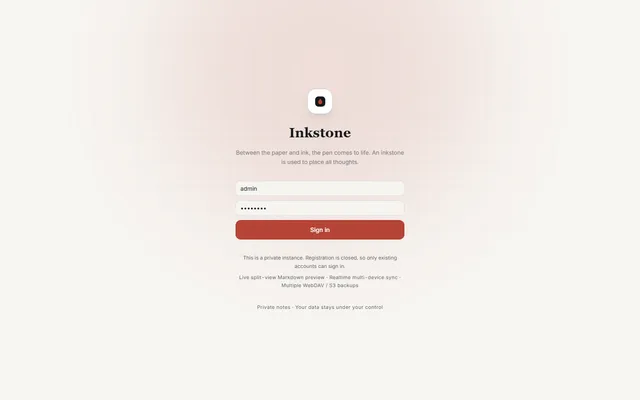
Private Markdown notebook with backlinks, offline sync, MCP access and WebDAV or S3 backups, running on Workers
- Deploy
- Manual
- License
- LGPL-3.0-only
- GitHub stars
- 1.1k stars
- Last commit
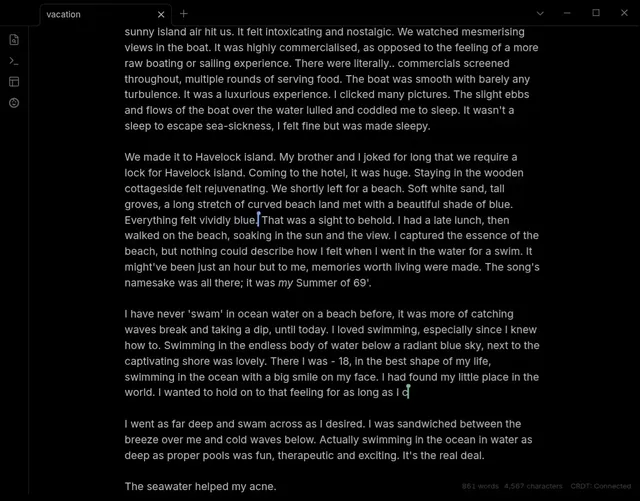
Live Obsidian vault sync over Yjs CRDTs, served by a Worker you deploy and claim in your own Cloudflare account
- Deploy
- One-click
- License
- 0BSD
- GitHub stars
- 1k stars
- Last commit
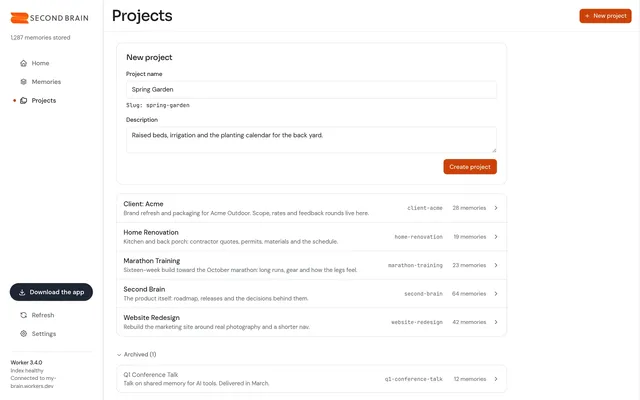
Self-hosted memory store that Claude, ChatGPT, Cursor and other MCP clients share, with recall by meaning
- Deploy
- One-click
- License
- MIT
- GitHub stars
- 802 stars
- Last commit